
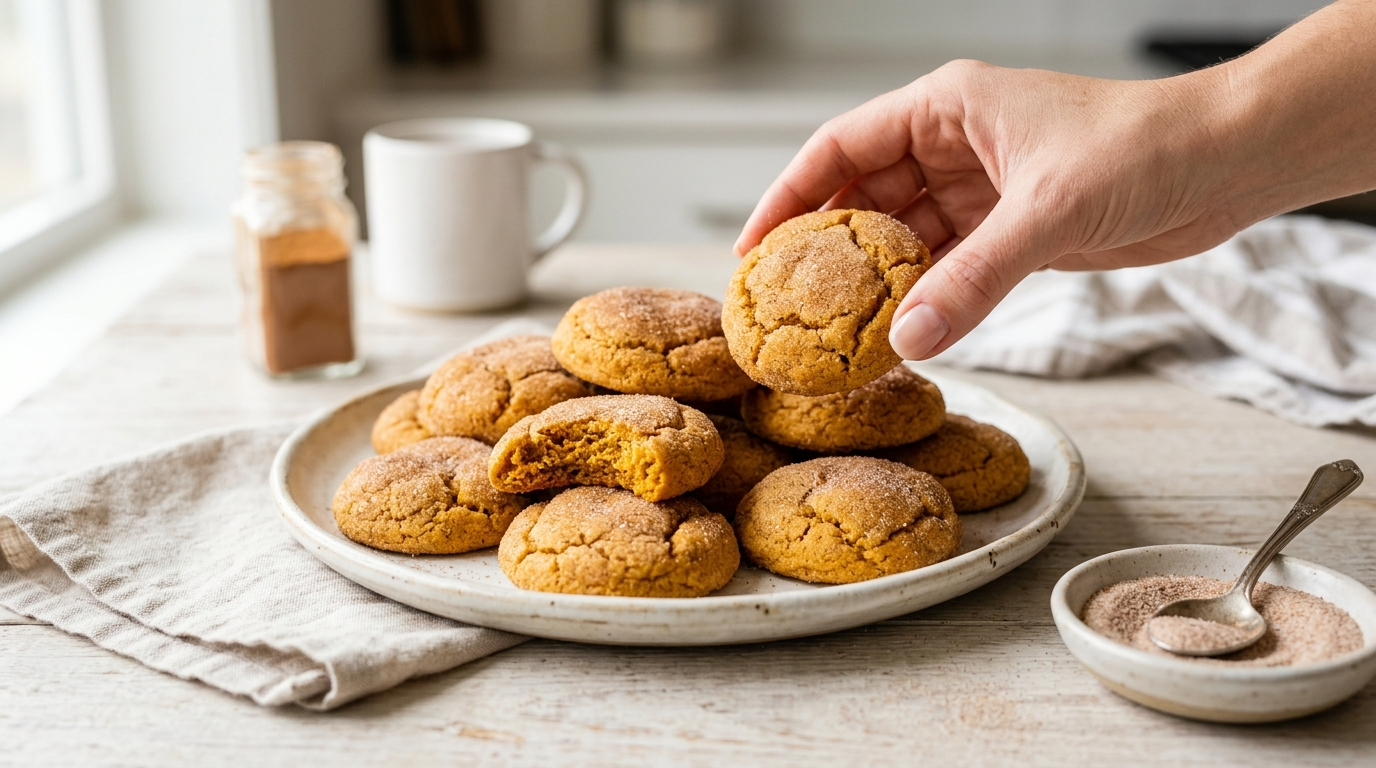
So you want pumpkin snickerdoodle cookies that are actually chewy, not little pumpkin cakes. I get it. The secret is blotting the pumpkin with paper towels to pull out extra water. That keeps the cookies chewy and means no long chill, so they’re done in 30 minutes. OH MY GOSH, that crackly cinnamon-sugar top and the smell of warm spice… you know?
Why You’ll Love These Pumpkin Snickerdoodles
- They’re chewy, not cakey. Blotted pumpkin and an egg yolk (no white) keep the texture dense and soft.
- There’s no long chill. Mix, roll, and bake. The whole batch is done in 30 minutes.
- That crackly top. Rolling the dough in cinnamon sugar gives you the classic snickerdoodle look.
Ingredients You’ll Need
Small details, big difference. The exact amounts are in the recipe card below.
Pumpkin purée. Use 100% pure pumpkin, not pumpkin pie filling. Measure ½ cup first, then blot it. Not sure which you can have? Our easy pumpkin desserts guide explains the difference.
Butter. Soften it until it’s easy to press with a finger but not greasy or melted. Melted butter makes flat cookies.
Granulated and brown sugar. The white sugar gives you crisp edges. Brown sugar adds moisture and that chewy middle.
Egg yolk only. I’ll be real with you: this matters. The white adds extra water, which pushes the cookies toward cakey. Save it for scrambled eggs.
Cream of tartar. This is what makes a snickerdoodle a snickerdoodle. It adds a gentle tang and helps keep the texture soft. More on that below.
Pumpkin pie spice. Store-bought is fine, or mix your own with the blend in our easy pumpkin desserts guide.
All-purpose flour. Spoon it into the measuring cup and level it off. Scooping straight from the bag packs in too much flour and makes cookies dry.
How to Make Pumpkin Snickerdoodle Cookies
Six simple steps. The full recipe card is below.
- Heat the oven and prep the pans. Heat the oven to 350°F (175°C) and line 2 baking sheets with parchment.
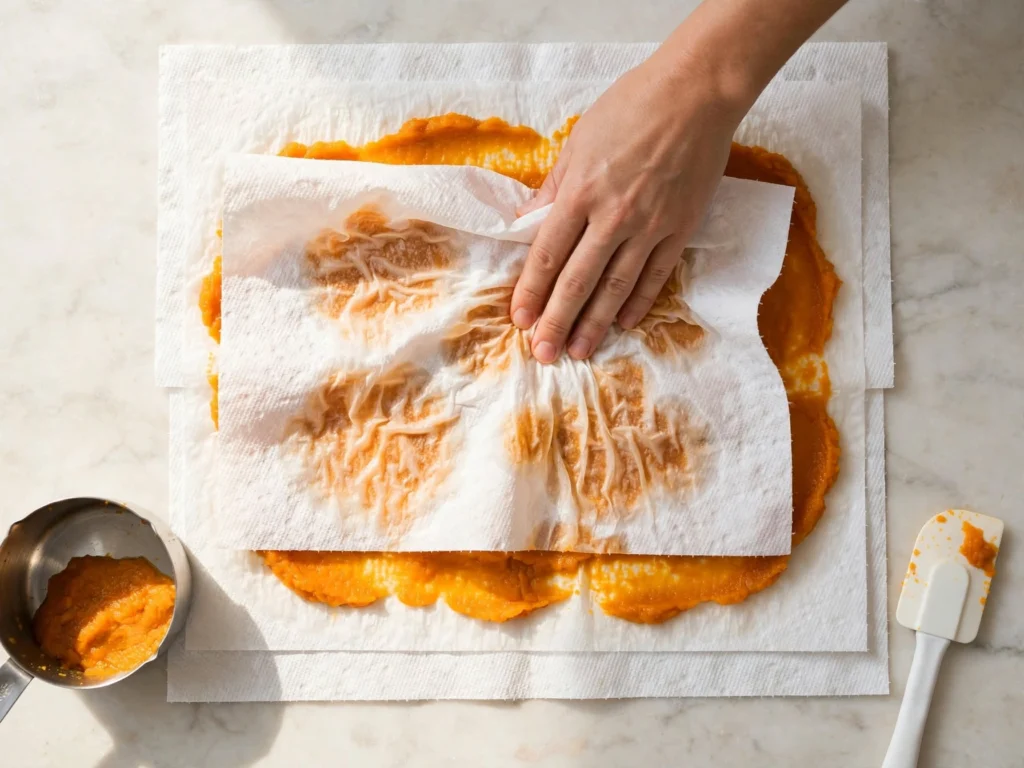
Tip: Parchment keeps the bottoms from over-browning and makes cleanup easy. - Blot the pumpkin. Spread it on a double layer of paper towels and press to remove excess moisture.

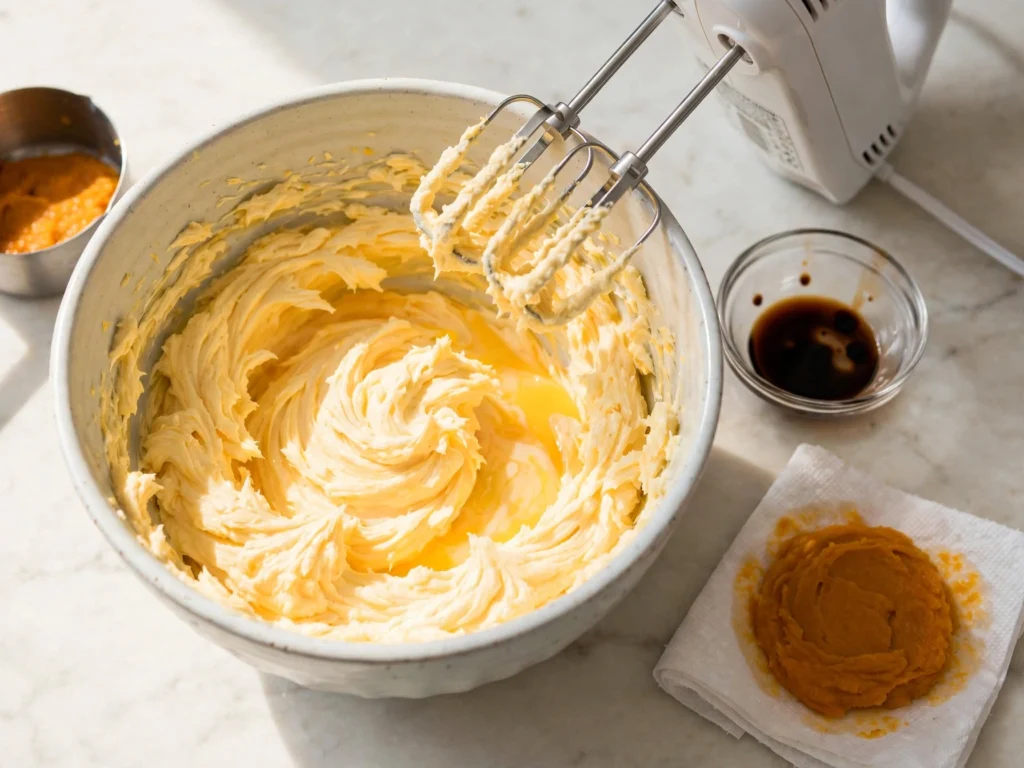
Tip: Here’s the thing: canned pumpkin holds a lot of water, and in the oven that water turns to steam that puffs cookies up like little cakes. Blotting it off keeps them chewy and makes the dough firm enough to roll without a long chill. Scrape the pumpkin off the towels with a spatula. - Cream the butter and sugars. Beat until fluffy, about 2 minutes, then beat in the pumpkin, egg yolk, and vanilla.
Tip: Don’t rush the 2 minutes. Fluffy butter is what gives the cookies their soft structure. - Add the dry ingredients. Whisk the flour, cream of tartar, baking soda, salt, and spice, then mix them in until just combined.
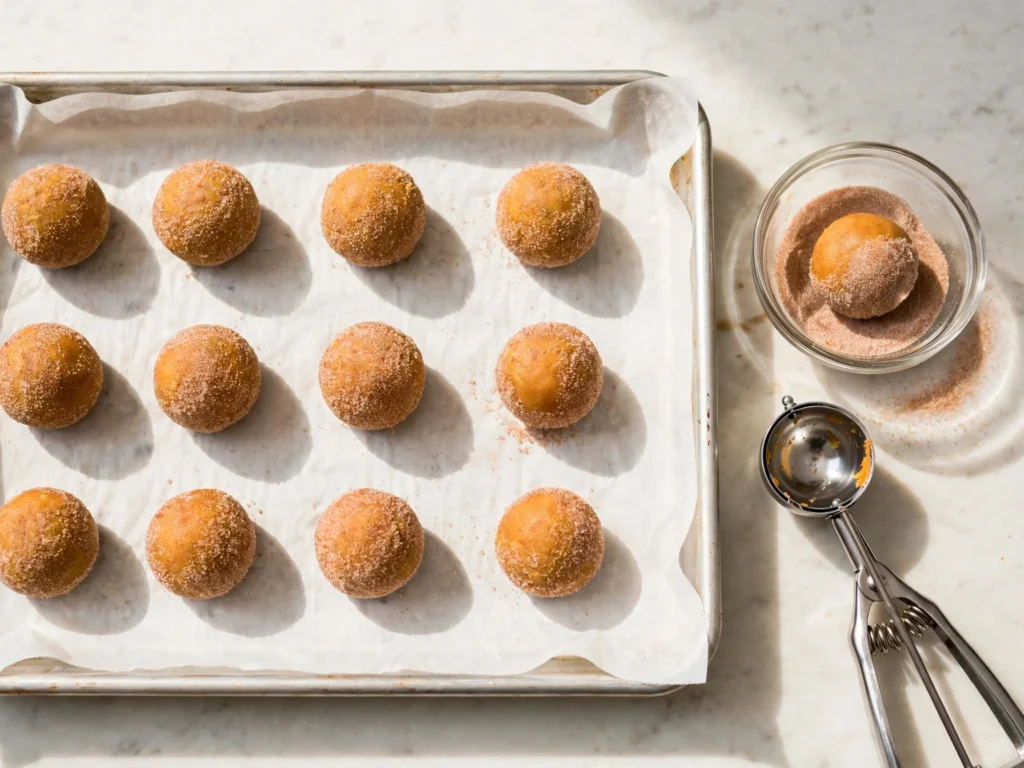
Tip: Stop as soon as you don’t see dry flour. Overmixing makes tough cookies. - Roll in cinnamon sugar. Mix the rolling sugar and cinnamon, roll the dough into 1½-tablespoon balls, and coat each one.
Tip: A cookie scoop keeps every ball the same size, so they all bake evenly. - Bake and cool. Bake 10–11 minutes, until the edges are set. Cool on the sheet 5 minutes before moving.
Tip: Pull them while the centers still look slightly soft. They finish setting on the hot pan.
Tips for Success
Bake both sheets at once. Place them on the upper and lower racks and swap halfway through. That’s how the full batch fits in 30 minutes.
Don’t skip the blotting. Trust me on this. It’s the single biggest difference between chewy and cakey.
Leave room to spread. Space the dough balls about 2 inches (5 cm) apart.
Use room-temperature ingredients. A cold egg yolk can make softened butter seize up, and then the dough won’t come together smoothly.
Troubleshooting
Cookies too cakey?
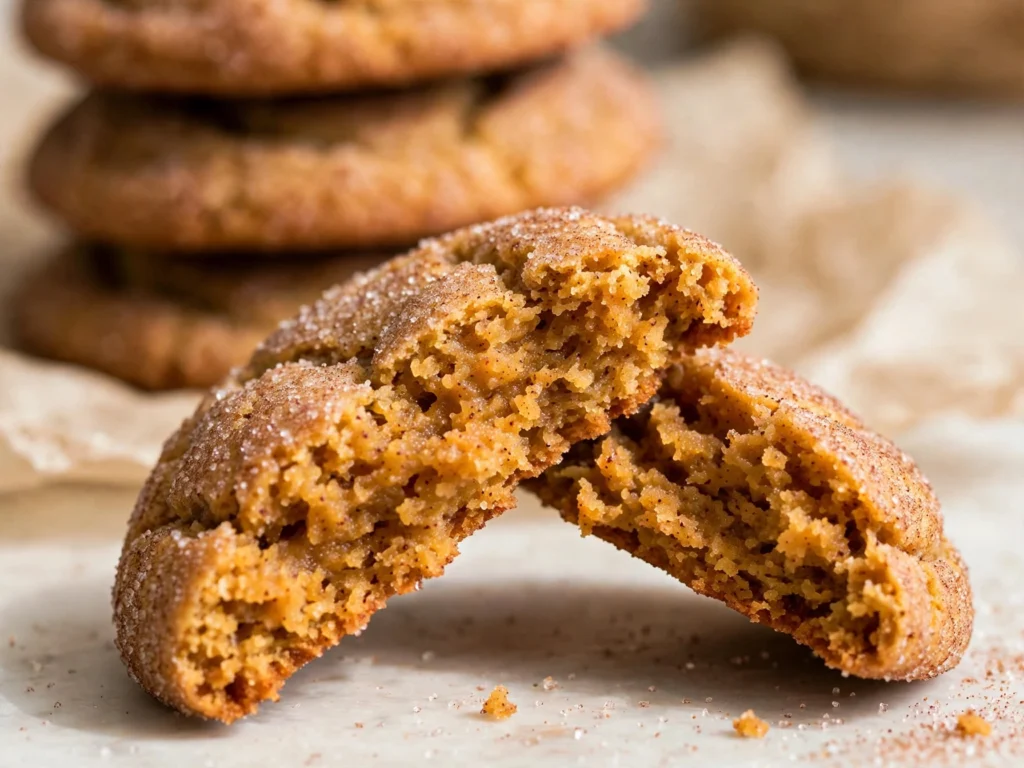
The usual causes are too much water, too much flour, or overbaking. Blot the pumpkin more firmly, spoon and level your flour instead of scooping, and make sure you used only the yolk. Then pull the cookies as soon as the edges are set.
Dough too sticky?
Chill it for 15 minutes. It firms up fast and becomes much easier to roll. Just know this adds 15 minutes, bringing the total to about 45 minutes. Sticky dough usually means the pumpkin needed a little more blotting or the butter was too soft.
Why cream of tartar?
Cream of tartar is an acid. It reacts with the baking soda to help the cookies rise, and it gives snickerdoodles their signature tang and soft, chewy bite. If you’re out, swap both the cream of tartar and baking soda for 2 teaspoons of baking powder. They’ll bake up fine, but they’ll taste more like a spiced sugar cookie.
Variations
Cream cheese sandwich cookies. Sandwich two cooled cookies with a swipe of cream cheese frosting. They’re great on a party table next to our Halloween appetizer ideas.
Chai-spiced sugar coating. Add ¼ tsp ground cardamom and ¼ tsp ground ginger to the rolling sugar for a cozy chai twist.
White chocolate drizzle. Melt ½ cup (85 g) white chocolate chips and drizzle it over the cooled cookies. Let it set for about 15 minutes before stacking.
Storage & Reheating
Room temperature: Store the cookies in an airtight container for up to 4 days. Add a slice of bread to the container to help keep them soft.
Freeze the dough balls: Roll the dough into balls without the cinnamon sugar and freeze them on a sheet until firm. Then transfer them to a freezer bag for up to 3 months. When you’re ready, roll them in cinnamon sugar and bake from frozen, adding 1–2 minutes.
Warm them up: Microwave a cookie for about 8–10 seconds for that fresh-from-the-oven softness.
FAQ
Do I need to chill pumpkin snickerdoodle dough?
Usually not. Blotting the pumpkin removes enough water that the dough is firm enough to roll right away, which is how these stay a 30-minute cookie. If your kitchen is warm or the dough feels sticky, chill it for 15 minutes. Just know that adds 15 minutes to the total time.
Can I use pumpkin pie filling instead of purée?
No. Pumpkin pie filling is already sweetened and spiced, so it throws off the sugar and spice balance in this recipe. Stick with 100% pure pumpkin purée. Not sure which you can have? Our easy pumpkin desserts guide explains the difference, plus how to mix your own pumpkin pie spice.
What’s the difference between a snickerdoodle and a sugar cookie?
Two things: cream of tartar and cinnamon sugar. Cream of tartar gives snickerdoodles their slight tang and soft, chewy texture, and the dough is rolled in cinnamon sugar before baking for that crackly top. Pumpkin snickerdoodles add pumpkin and warm spice, which makes them one of the coziest fall cookies around.
You’ve got this. — Chef Julia.
Soft & Chewy Pumpkin Snickerdoodle Cookies
Prep Time: 15 minutes
Cook Time: 11 minutes
Total Time: 30 minutes
Yield: 24 cookies
Ingredients
- 1/2 cup (113 g) unsalted butter, softened
- 3/4 cup (150 g) granulated sugar
- 1/4 cup (50 g) packed brown sugar
- 1/2 cup (120 g) pumpkin purée, blotted with paper towels
- 1 large egg yolk
- 1 tsp vanilla extract
- 2 1/4 cups (280 g) all-purpose flour
- 1 tsp cream of tartar
- 1/2 tsp baking soda
- 1/2 tsp salt
- 1 1/2 tsp pumpkin pie spice
- 1/4 cup (50 g) granulated sugar, for rolling
- 1 tsp ground cinnamon, for rolling
Instructions
- Heat the oven to 350°F (175°C) and line 2 baking sheets with parchment.
- Spread pumpkin on a double layer of paper towels and press to remove excess moisture.
- Beat butter and both sugars until fluffy, about 2 minutes. Beat in pumpkin, egg yolk, and vanilla.
- Whisk flour, cream of tartar, baking soda, salt, and pumpkin pie spice into the wet ingredients until just combined.
- Mix the rolling sugar and cinnamon. Roll dough into 1 1/2-tbsp balls and coat in cinnamon sugar.
- Bake 10–11 minutes until the edges are set. Cool on the sheet 5 minutes before moving.