
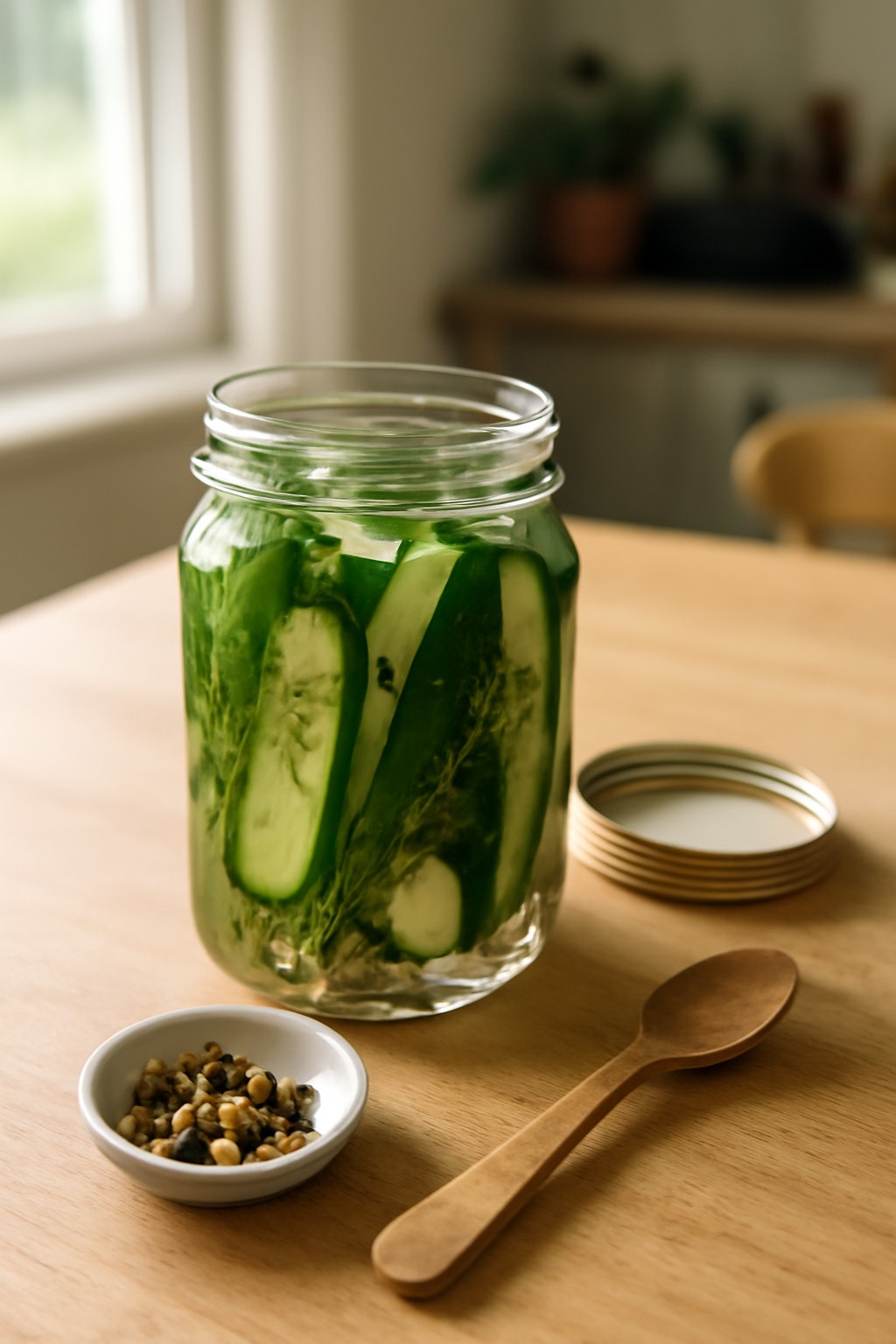
Why Refrigerator Pickles (No Canning Required)
I spent years thinking I needed a whole setup to make pickles—a giant pot, special jars, a canning rack, the works. Then I made a batch of refrigerator pickles on a random Tuesday afternoon using literally just a mason jar and things I already had in my pantry, and I felt genuinely silly for waiting so long. The thing is, refrigerator pickles aren’t some lesser version of the “real” thing. They’re actually crispier because they never get heated, they’re ready to eat in two days instead of weeks, and there’s zero intimidation factor. You’re just combining vegetables with vinegar and salt in a jar, putting it in the fridge, and waiting. That’s it.
Here’s what makes this approach so practical for busy people: there’s no special equipment, no timing stress, no worrying about whether you did the canning part correctly. You don’t need to sterilize anything in a hot water bath or figure out pressure levels. The vinegar and salt do all the preservation work for you, and the cold temperature keeps everything safe and crisp. If you’ve ever hesitated to make homemade pickles because the canning process felt like too much, this is your answer.
What You’ll Need (Ingredients & Equipment)
The beauty of refrigerator pickles is that the ingredient list is genuinely short, and you probably have most of it already. You need cucumbers (or whatever vegetable you’re pickling), vinegar, salt, water, and whatever seasonings appeal to you. That’s the foundation. Everything else—dill, garlic, peppercorns, red pepper flakes—is optional flavor building.
For equipment, you need a mason jar (quart-sized works great for most batches) and a way to measure. That’s actually all. No special lids, no racks, no thermometers. A regular mason jar with its regular lid does the job perfectly fine.
Step-by-Step Recipe
The actual process is straightforward enough that you can do it while your coffee is still hot. Wash your cucumbers and trim off the blossom end (the end opposite the stem)—this prevents soft pickles because the blossom end contains enzymes that break down the cell walls. Pack them into your jar along with whatever aromatics you’re using: garlic cloves, fresh dill, peppercorns, whatever sounds good.
In a small pot or measuring cup, combine your vinegar, water, and salt. You don’t need to heat it—just stir until the salt dissolves. This is the brine. Pour it over the cucumbers until they’re completely covered. Screw the lid on and stick the jar in the fridge. That’s genuinely the entire process. Check back in 24 hours if you’re curious, but they won’t be quite ready yet. At 48 hours, they’ll have that proper pickle flavor and texture. They’ll keep getting more flavorful over the next week or so.
How Long Do Refrigerator Pickles Last?
Refrigerator pickles will stay good for about three to four weeks in the fridge, assuming you’re eating them with a clean fork and not double-dipping. The flavor actually gets stronger over time, so don’t feel like you need to eat them all at once. Some people prefer them at the two-day mark when they’re fresher and crunchier. Others wait a week when the flavor has really developed. There’s no wrong timing—just depends on what you’re in the mood for.
Tips for Crispy, Flavorful Pickles
The number one thing that makes or breaks refrigerator pickles is using fresh, firm cucumbers. If you’re buying them from the store, pick ones that feel heavy for their size and don’t have soft spots. Farmers market cucumbers are often your best bet because they haven’t been sitting around as long.
That blossom end thing I mentioned? Actually important. The enzymes there will make your pickles soft and mushy if you leave them on. Just slice off about a quarter-inch from the end opposite the stem, and you’re good.
For crispier pickles, add a grape leaf, oak leaf, or a few horseradish leaves to the jar if you can find them. They contain tannins that help keep the pickles firm. If you can’t find those, honestly, fresh dill fronds work too and taste better anyway.
Don’t skimp on the vinegar. You need the acidity for both flavor and safety. White vinegar, apple cider vinegar, or rice vinegar all work—just use 5% acidity or higher (it’ll say on the bottle). The ratio I use is roughly one part vinegar to one part water, with enough salt to make it taste right. Taste the brine before you pour it over the cucumbers. It should taste salty and tangy, like something you’d actually want to eat.
Flavor Variations & Vegetable Options
While dill pickles are the classic, refrigerator pickles work with almost anything. Try pickling green beans for a snappier side dish. Carrots, radishes, and onions all pickle beautifully and take about the same time. You can even do a mixed vegetable jar with whatever you have on hand.
For flavor, the options are endless. Spicy pickles get fresh or dried red pepper flakes and maybe some garlic. Garlicky dill is the obvious play. If you want something sweeter, add a tablespoon or two of sugar to the brine. Mustard seeds, coriander seeds, and black peppercorns add complexity. Fresh herbs like tarragon or thyme work if that’s your thing. The point is, once you understand the basic formula—vinegar, salt, water, vegetables—you can build whatever flavor profile you want.
Storage & Food Safety
Keep your pickles in the coldest part of your fridge, ideally below 40°F. Make sure they stay submerged in the brine the whole time—any part that sticks out above the liquid can get moldy. If pieces float up, just push them back down when you think about it.
Use a clean fork or tongs to take pickles out, not your fingers. This keeps bacteria out of the jar and extends how long they’ll last. As long as you’re using proper vinegar with at least 5% acidity and keeping everything refrigerated, you’re safe. The combination of salt, vinegar, and cold temperature is a pretty effective preservation system.
Troubleshooting Common Issues
Soft or mushy pickles: You either left the blossom end on, used old cucumbers, or didn’t use enough vinegar. Next batch, trim those ends and use the freshest cucumbers you can find.
Pickles taste too salty: You used too much salt or didn’t dilute it enough with water. The brine should taste good on its own—taste it before you pour it. If it’s already too salty, you can rinse the pickles before eating them.
Pickles taste bland: Either your vinegar is too weak or you didn’t use enough of it. Make sure you’re using proper vinegar (5% acidity minimum) and follow the ratios in the recipe. You can also add more salt or spices to the next batch.
Mold on top: The pickles weren’t fully submerged in the brine. Make sure everything is covered in liquid before you put the lid on.
Why This Method Works
The reason refrigerator pickles are so reliable is that you’re not fighting against time or complicated processes. The vinegar preserves everything, the salt adds flavor and helps with preservation, and the cold keeps it all stable. You make them, you forget about them for two days, and then you have pickles. No canning equipment, no special skills, no stress. Just vegetables, vinegar, and patience—and honestly, mostly just the vinegar.
Refrigerator Pickles Without Canning
A simple no-cook refrigerator pickle recipe ready in 48 hours using just cucumbers, vinegar, salt, and seasonings. No canning equipment or special skills required.
Ingredients
- 2 pounds fresh pickling cucumbers (or regular cucumbers)
- 1 cup white vinegar or apple cider vinegar (5% acidity)
- 1 cup water
- 2 tablespoons kosher salt
- 3 cloves garlic, smashed
- 3 to 4 sprigs fresh dill
- 1 teaspoon black peppercorns
- 1/2 teaspoon red pepper flakes (optional)
Instructions
- Wash the cucumbers thoroughly under cold running water. Trim off the blossom end (the end opposite the stem) from each cucumber by slicing off about 1/4 inch.
- Pack the cucumbers into a clean quart-sized mason jar, standing them upright or laying them on their side, depending on the jar size.
- Add the smashed garlic cloves, fresh dill sprigs, black peppercorns, and red pepper flakes (if using) to the jar with the cucumbers.
- In a measuring cup or small bowl, combine the vinegar, water, and kosher salt. Stir until the salt is completely dissolved.
- Taste the brine—it should be tangy and salty, like something you’d want to eat. Adjust vinegar or salt if needed.
- Pour the brine over the cucumbers until they are completely submerged. Make sure no cucumber pieces stick above the liquid.
- Screw the lid onto the mason jar and place it in the refrigerator.
- Let the pickles sit for at least 48 hours before eating. They will continue to develop flavor over the next week.
- Once opened, use a clean fork or tongs to remove pickles from the jar. Keep remaining pickles submerged in the brine.
Notes
Use fresh, firm cucumbers for the crispiest results. The blossom end (opposite the stem) contains enzymes that soften pickles, so trimming it is important. You can use white vinegar, apple cider vinegar, or rice vinegar as long as it has at least 5% acidity. For extra-crisp pickles, add a grape leaf, oak leaf, or horseradish leaf to the jar if available.
Storage
Store in the refrigerator for 3 to 4 weeks. Keep pickles fully submerged in brine. Use clean utensils when removing pickles from the jar. Do not use fingers to grab pickles.
Frequently Asked Questions
Do I need any special equipment to make refrigerator pickles?
No. You only need a mason jar with a lid and basic kitchen items like measuring spoons and a knife. No canning equipment, racks, or special jars are required.
Can I use regular cucumbers instead of pickling cucumbers?
Yes, you can use regular cucumbers, though pickling cucumbers (also called Kirby cucumbers) tend to stay crispier because they have fewer seeds and thinner skin. If using regular cucumbers, choose smaller, firmer ones and eat the pickles sooner.
What type of vinegar should I use?
Use any vinegar with at least 5% acidity, which you’ll find listed on the bottle. White vinegar, apple cider vinegar, and rice vinegar all work well. Avoid balsamic or other specialty vinegars, as they have different acidity levels and flavors.
Why do my pickles get soft?
Soft pickles usually result from leaving the blossom end (the end opposite the stem) on the cucumber—this end contains enzymes that break down cell walls. Always trim off about 1/4 inch from this end. Using old cucumbers or not enough vinegar can also cause softness.
How long do refrigerator pickles last?
Refrigerator pickles will keep for 3 to 4 weeks in the fridge as long as they stay submerged in brine and you use clean utensils to remove them. The flavor actually gets stronger over time.
Can I reuse the brine for a second batch?
You can, but the brine will be weaker the second time since some of the vinegar will have been absorbed by the first batch. Add fresh vinegar and salt to strengthen it before using it again, or simply make a fresh batch for best results.
When are the pickles ready to eat?
Refrigerator pickles are ready after 48 hours, though they continue to develop flavor over the next week. Some people prefer them at 2 days when they’re fresher and crunchier; others wait longer for more developed flavor. There’s no wrong timing.
Can I pickle vegetables other than cucumbers?
Absolutely. Green beans, carrots, radishes, onions, and mixed vegetables all pickle well using the same method and similar timing. Adjust the brine ratio if needed based on the vegetable’s density.
What if mold appears on top of my pickles?
Mold usually means the pickles weren’t fully submerged in the brine. Make sure all vegetables are covered with liquid before sealing the jar. If mold appears, discard that batch and start fresh, ensuring complete submersion next time.
Can I make refrigerator pickles without garlic or dill?
Yes. The basic brine is just vinegar, water, and salt. You can leave out any seasonings or add different ones like mustard seeds, coriander, red pepper flakes, or fresh herbs based on your preference.